Shopify vs WordPress vs Custom Website: Which Is Right for Your Business?
Wednesday, September 16, 2026
Choosing the right platform is an important decision when planning a website for your business in Malaysia. The right choice depends on what you sell, how you operate, the features you need and how much control you want over the website.
Shopify, WordPress with WooCommerce and custom development each serve different purposes. Understanding the differences can help you choose a solution that fits your business today and remains practical as it grows.
Shopify vs WordPress: What's the Difference?
Shopify and WordPress can both support a professional business website, but they take very different approaches.
Shopify is a managed platform, with hosting, security, updates and core e-commerce features handled within the service. This makes it relatively straightforward for businesses that want to focus on selling products rather than managing the technical side of their website.
WordPress, particularly with WooCommerce, gives businesses more control over the website environment. Hosting, plugins, themes, integrations and functionality can be selected and configured according to the business requirements. This flexibility makes it suitable for websites that need more than standard e-commerce features.
The difference becomes more important as the website becomes part of a wider business operation. A Shopify store may be sufficient for a straightforward product catalogue and checkout process, while WordPress can provide more room for customised content, integrations and customer journeys.
For businesses in Malaysia, factors such as payment options, third-party integrations, SEO requirements, content management and future expansion should be considered alongside the initial website cost.
In simple terms, Shopify prioritises convenience and managed e-commerce, while WordPress offers greater control and flexibility. The better choice depends on how your business needs the website to function.
Shopify — Best for Businesses That Want to Sell Online
For businesses focused on e-commerce, Shopify offers a practical way to manage an online store without taking on much of the technical infrastructure.
Its strength lies in keeping the core selling process in one place — from product management and inventory to checkout and order handling. This can be particularly useful for Malaysian businesses that want their team to spend more time managing products and customers rather than website maintenance.
Shopify can be a good fit for:
- Retail and product-based businesses looking to establish or expand online sales
- Businesses with a focused product range that do not require highly specialised functionality
- Teams that prefer simpler day-to-day management
- Brands planning to scale online without having to manage hosting and server infrastructure themselves
The platform also supports a wide range of apps and integrations, allowing businesses to extend their store when additional requirements arise.
However, adding more third-party apps can increase ongoing costs and may introduce limitations when a business requires functionality that does not fit within Shopify's standard ecosystem.
For many Malaysian e-commerce businesses, Shopify makes sense when reliable store management and operational simplicity are more important than extensive technical customisation.
WordPress + WooCommerce — Best for Flexibility and Content
WordPress with WooCommerce is often a stronger choice when a business needs its website to do more than sell products.
The combination allows businesses to shape the website around their content, brand and customer journey. Product pages can sit alongside service information, articles, landing pages and other sections without being restricted to a purely store-focused structure.
This can be valuable for Malaysian businesses that depend on SEO, content marketing or organic search to attract potential customers. Businesses have greater control over page structure, content presentation and how different parts of the website connect.
WooCommerce also provides room for a wider range of integrations and extensions. This can support requirements such as local payment solutions, shipping services, marketing tools and other business systems.
WordPress + WooCommerce is particularly suitable for businesses that:
- Need a strong content and e-commerce presence
- Want greater control over their website structure
- Expect to customise the customer experience
- Require integrations beyond standard store functions
- Plan to invest in long-term SEO and content
The trade-off is that greater flexibility comes with more responsibility. Hosting, updates, plugins, security and ongoing maintenance need to be properly managed.
For businesses that want their website to function as both a sales channel and a broader digital platform, WordPress + WooCommerce can offer the flexibility to support that direction.
Custom Website — When Your Business Needs More
Some businesses have requirements that go beyond what a standard website platform can comfortably provide. This is where a custom website can offer more flexibility.
Consider an art gallery or creative space in Malaysia that regularly hosts exhibitions, artist showcases, workshops and special events. Its website may need to present dozens of artists, manage different exhibitions, publish event schedules, sell tickets, collect registrations and connect each event with its respective artist or artwork.
A standard platform may handle some of these functions, but a custom solution can bring them together into one experience designed around how the organisation actually operates.
A custom website can be considered when a business needs:
- Complex event management with different dates, venues and registration options
- Artist or portfolio profiles connected to exhibitions and individual works
- Custom booking or ticketing flows based on different event requirements
- Third-party integrations such as CRM, payment or marketing systems
- Content structures that are specific to the organisation
- A tailored user experience that cannot be achieved easily with standard themes or plugins
The value is not simply having more features. It is having a website that reflects the way the business works.
At RNTech, we develop custom web solutions for businesses with specific workflows, integrations and digital requirements — particularly when an off-the-shelf platform starts to become a limitation.
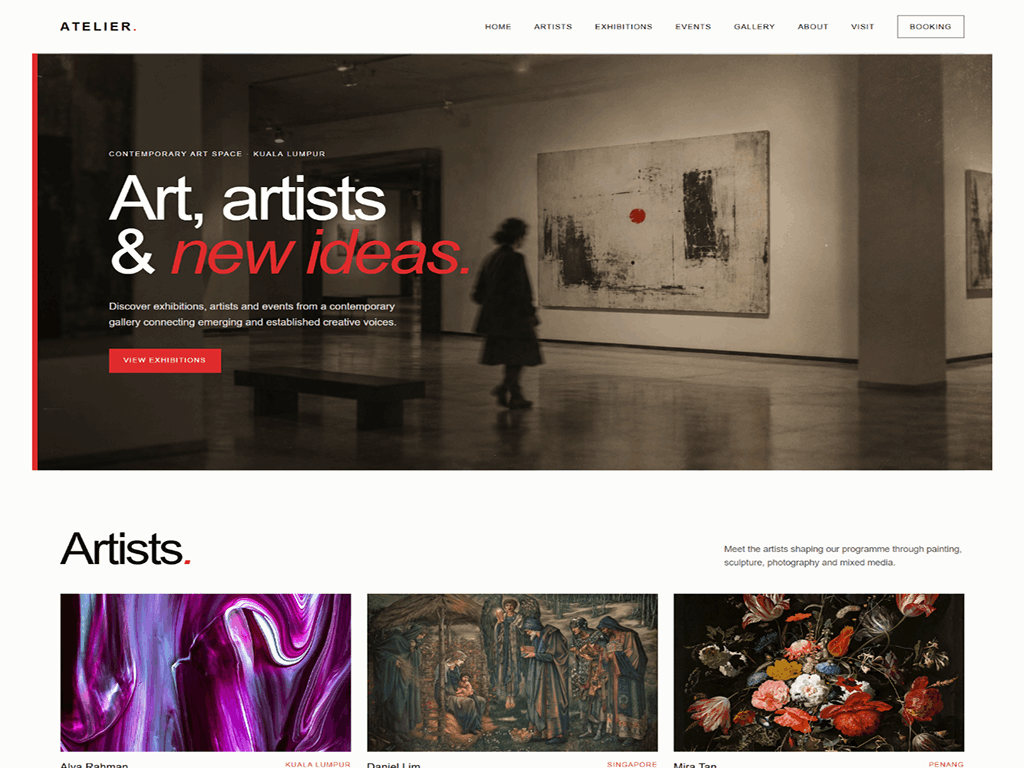
A custom website can connect artists, exhibitions, events and bookings in one seamless experience for an art gallery in Malaysia.
Cost Considerations in Malaysia
The cost of a website in Malaysia can vary significantly depending on the platform, functionality and level of customisation involved. Looking only at the initial development cost can make the comparison misleading.
With Shopify, businesses typically work within a platform-based model, with ongoing costs related to the subscription and additional apps or services they choose to use.
WordPress + WooCommerce offers more control over the setup, but businesses may need to consider hosting, premium plugins, maintenance, security and development support as part of the overall investment.
A custom website requires more planning and development because the functionality is tailored to the business. The initial investment may therefore be higher, particularly when the project involves integrations, complex workflows or bespoke features. However, the right solution can reduce the need to work around platform limitations later.
For businesses in Malaysia, it is worth considering the total cost of ownership, including maintenance, third-party services, future changes and scalability — not just the cost of launching the website.
The most suitable option is ultimately the one that provides the right balance between functionality, flexibility and long-term business value.
SEO & Performance
The platform you choose does not automatically determine how well your website performs in search. Shopify, WordPress and custom websites can all achieve strong SEO results when the technical foundation and content are handled properly.
The main difference is the level of control available.
Shopify provides a managed environment that covers many technical aspects, making it easier for businesses to maintain a consistent setup. However, businesses may have less control when they require highly specific technical changes.
WordPress + WooCommerce offers greater flexibility across site structure, content, metadata, plugins and other SEO elements. Performance, however, can depend heavily on hosting, plugins, themes and how the website is configured.
With a custom website, developers have greater control over the underlying structure and functionality. This can be useful for businesses with specific performance or SEO requirements, although the result depends heavily on the quality of the development.
For businesses targeting customers in Malaysia, factors such as mobile experience, page speed, content structure, technical SEO and relevant local content all contribute to search visibility.
Ultimately, the platform is only part of the equation. How the website is planned, developed and maintained has a much greater impact on SEO and performance.
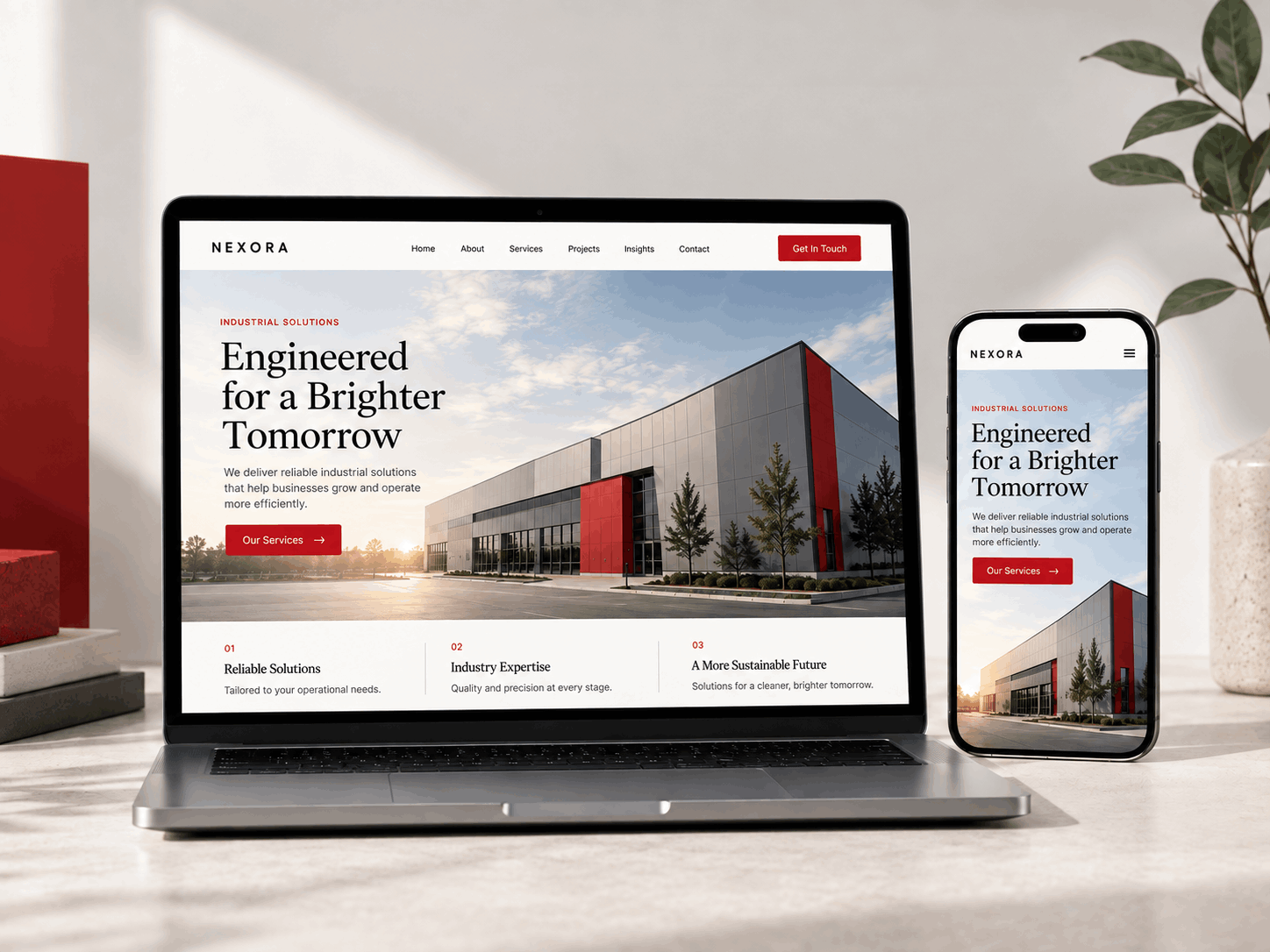
A well-structured website supports performance, mobile usability and stronger technical foundations for SEO.
Ease of Management
Managing a website should not become a technical task that takes your team away from running the business. The right setup should make everyday updates clear and manageable.
Shopify is generally straightforward for day-to-day e-commerce tasks such as managing products, orders and inventory. Its managed environment also reduces the need for businesses to handle technical maintenance themselves.
WordPress + WooCommerce provides more control, but that flexibility can mean more areas to manage. Updates, plugins, hosting, security and compatibility may require regular attention, particularly as the website becomes more complex.
A custom website can be designed around the way your team actually works. With RNTech, the management side can be planned as part of the development process — from content updates and product management to enquiries, events or other business-specific workflows.
Instead of giving your team a collection of features they may never use, the system can focus on the functions that matter to the business. This can make daily management more organised and reduce unnecessary steps.
For businesses with specific operational requirements, a well-planned custom website can provide both flexibility and a simpler management experience.
Which One Should Your Business Choose?
There is no single platform that works best for every business. The right choice depends on what your website needs to achieve and how your team plans to manage it.
Choose Shopify if your main priority is running an online store with a straightforward management experience. It is a practical option for product-based businesses that do not require highly specialised functionality.
Choose WordPress + WooCommerce if you want more flexibility across content, e-commerce and SEO. It can be a strong fit for businesses that want greater control over their website structure and digital content.
Choose a Custom Website if your business has specific workflows, integrations or functionality that standard platforms cannot handle effectively. This can be particularly relevant for businesses with more complex operations, such as event platforms, galleries, booking systems or customer portals.
For businesses in Malaysia, the decision should also consider long-term requirements rather than only the initial setup. Think about how the website will support your customers, your internal team and future changes to the business.
At RNTech, we can help assess your requirements and recommend the approach that makes the most sense — whether that is Shopify, WordPress + WooCommerce or a custom web solution.
Conclusion
Shopify, WordPress + WooCommerce and custom development each have their own strengths. The right choice depends on your business model, operational needs and how much flexibility you require.
A straightforward online store may work well with Shopify, while a content-driven business may benefit from WordPress. Businesses with more specialised requirements may find greater value in a custom website designed around their workflows.
Your decision also does not have to mean starting from scratch. If you already have a Shopify or WordPress website, the next step may simply be a redesign, performance improvement or new integration to better support your business.
At RNTech, we help businesses in Malaysia improve their existing websites as well as develop new digital solutions. Whether you need a Shopify redesign, third-party integration, WordPress improvement or a custom web solution, we can help you find a practical approach based on your requirements.
Have a website that could work better for your business?
Talk to RNTech about what you need next.