Can AI Build a Website? What AI Can and Can't Do in Web Development
Sunday, August 9, 2026
Can AI Really Build a Website?
The development of artificial intelligence (AI) has changed the way websites are built. Today, AI does more than assist with writing code. It can also generate interfaces, create prototypes, and build functional website pages in significantly less time.
With the right instructions, AI can help generate HTML, CSS, JavaScript, application components, and responsive page structures. For businesses in Malaysia, this technology makes it easier and faster to explore website ideas and turn them into working prototypes.
AI can also assist developers with creating prototypes, exploring different design concepts, identifying potential issues in code, and handling repetitive development tasks.
So, can AI really build a website?
Yes, AI can help build a website. But building a website for the needs of a real business is a different challenge.
What AI Can Do in Web Development
AI can now be used across various stages of the web development process, not just to build a website from scratch. For developers, AI can serve as a tool to accelerate their work, explore solutions, and reduce repetitive tasks.
Some of the areas where AI can assist include:
- Generate code — helping produce code based on specific requirements or functionality.
- Generate components — creating website components such as forms, navigation, cards, and other interface elements.
- Create UI concepts — helping explore layouts and design concepts before moving into development.
- Debug code — identifying potential issues and suggesting possible solutions.
- Refactor code — helping simplify and organise code to make it easier to maintain.
- Generate documentation — assisting with technical documentation and explaining specific parts of a system.
- Automate repetitive tasks — reducing manual, repetitive work so developers can focus on tasks that require greater technical judgement.
These capabilities make AI increasingly relevant to the web development process, including web development in Malaysia, where businesses are looking for more efficient development processes without compromising quality or technical requirements.
AI can now handle many parts of the development process, allowing developers to work faster and more efficiently. However, the ability to generate code quickly is not the only factor that determines whether a website is ready to operate in a real business environment.
Generated Code ≠ Production-Ready Website
AI's ability to generate code continues to evolve. In a short amount of time, AI can produce pages, components, and even application structures that may appear complete.
However, code that works does not necessarily mean a website is ready for production.
A business website needs to be designed as a connected system. Every part needs to work reliably, securely, and according to the needs of the business.
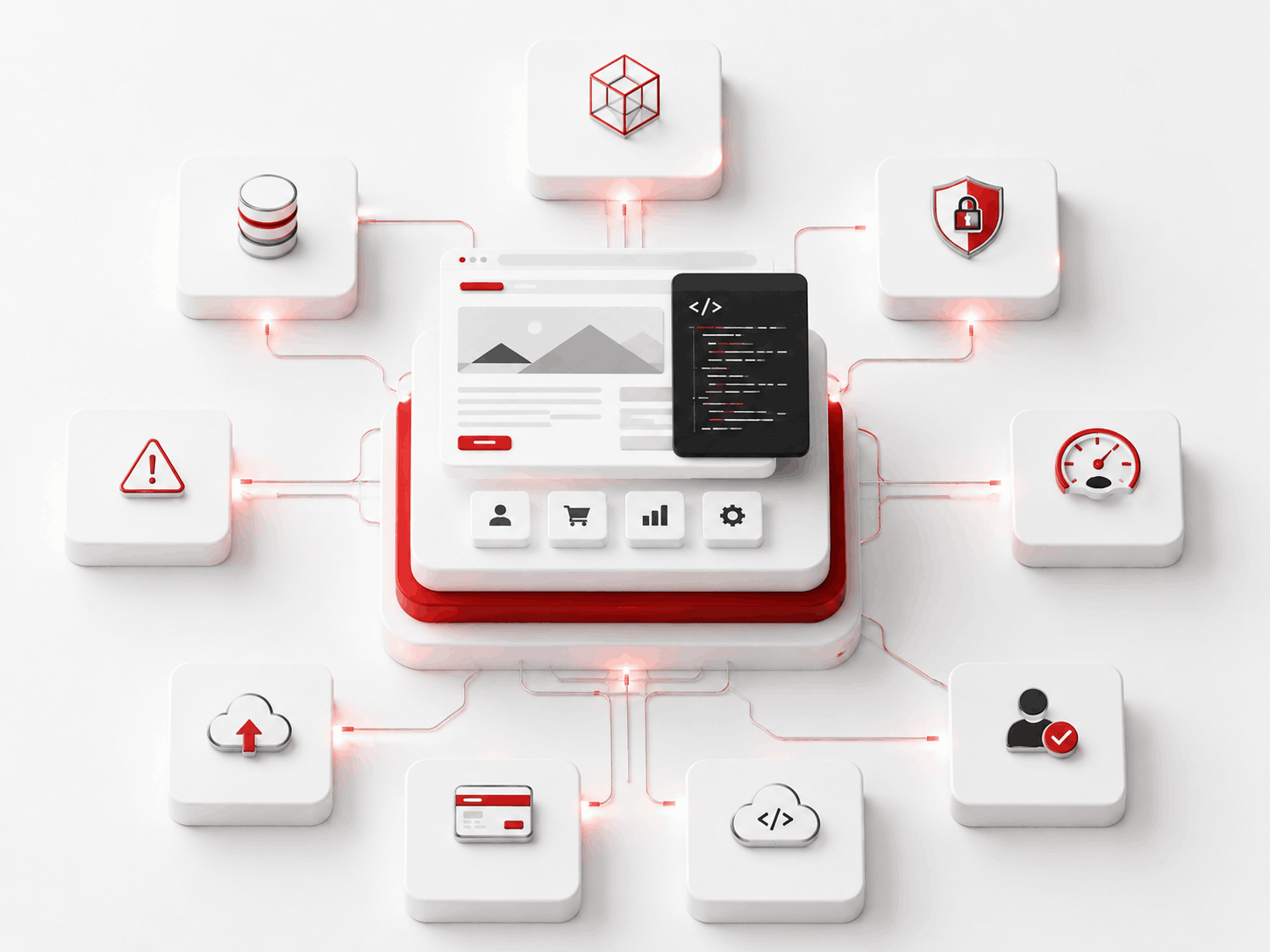
Architecture
Before writing code, decisions need to be made about how the website will be structured. Application architecture, how different components interact, and how the system can be developed further over time are all important technical considerations.
AI can suggest different approaches, but choosing an architecture that fits the needs of a particular business still requires technical judgement.
Database
Websites that handle customer data, products, transactions, articles, or other information require a well-structured database.
How data is stored, related, accessed, and managed can affect both performance and the system's ability to scale as the business grows.
Security
Business websites also need to be built with security in mind.
Authentication, user permissions, data protection, input validation, and potential security issues need to be considered from the beginning, especially when a website handles user information or transactions.
Performance
A website that looks good does not necessarily perform well.
Asset sizes, code structure, database queries, server configuration, caching, and many other factors can affect how quickly a website loads and responds.
For businesses in Malaysia that rely on their websites to generate enquiries, sell products, or provide information to customers, performance is more than a technical consideration. It can directly affect the user experience.
Authentication
When a website includes customer accounts, admin dashboards, or different types of users, authentication and authorisation become important parts of the system.
It is not simply about creating a login page. The system also needs to ensure that each user can only access the functions and data they are authorised to use.
API Integrations
Many modern websites do not operate on their own. They may need to connect with CRM systems, email services, WhatsApp, analytics platforms, inventory systems, or other third-party APIs.
These integrations require more than simply generating code. Each service has its own requirements, authentication methods, data structures, and potential errors that need to be handled properly.
Payment Gateways
For eCommerce websites and businesses that accept online payments, payment gateways are an important part of the system.
The payment process needs to be integrated correctly, transaction data needs to be handled securely, and situations such as failed payments, duplicate requests, or different transaction statuses need to be properly considered.
Deployment
A website that has been developed still needs to be prepared for production.
Server configuration, environment variables, database connections, domains, SSL, deployment processes, and monitoring all play a role in ensuring that the website operates properly after launch.
Error Handling
Not every situation will go as planned.
Users may enter invalid information, an API may experience an issue, a payment may fail, or a service may become temporarily unavailable. The system needs to handle these situations properly without unnecessarily disrupting the user experience.
This is an important difference between generating code and building a website that is truly ready for real-world use.
AI can generate code, but someone still needs to make sure the entire system works together.
AI can accelerate many parts of the development process. However, decisions about how a system should be designed, integrated, tested, and prepared for production still require technical expertise and an understanding of the business context.
AI Doesn't Know Your Business Like You Do
Building a website is not simply about choosing the right colours, layout, or technology. A website should be built around how a business operates and what it wants to achieve through its digital presence.
.png)
Imagine a property business in Malaysia giving AI a simple instruction:
“Build a modern website for a property company.”
AI may be able to generate a website with a modern, responsive design and pages such as Home, About, Properties, and Contact.
Visually, the result may already look very good.
However, the actual business requirements can be much more complex.
A property company may need:
- Property listings to display properties based on location, price, property type, or other criteria.
- Agent management to manage agent information and access.
- CRM integration to connect enquiries from the website with the system used by the business.
- WhatsApp integration to make it easier for potential customers to contact agents.
- Lead management to help the team track and manage enquiries.
- Admin dashboard to manage content, properties, users, and other data.
- Custom enquiry workflows that are built around the company's actual business processes.
Not all of these requirements can be communicated through a single prompt.
AI can generate solutions based on the information it is given. But it does not automatically know how a business receives leads, who handles enquiries, how customer data is used, what systems are already in place, or which processes are most important to the business.
That is why web development starts with understanding requirements, not simply writing code.
The same applies to other types of businesses. An eCommerce business may need inventory and payment gateway integrations. A service-based company may need lead management and CRM integration. A business with multiple branches may require different content structures and user access levels.
A good website is not simply a website that looks good. It should support the way a business actually works.
The question isn't just “Can AI build a website?” It's “Can AI understand what your business actually needs?”
Ultimately, technology is only one part of the process. Understanding the business, defining the right requirements, and turning them into an appropriate digital solution remain essential parts of web development.
What Happens After the Website Goes Live?
Building a website does not mean the process is finished once the code has been completed. After a website is launched, it becomes part of the customer's experience and may become an important part of the business's day-to-day operations.
The lifecycle of a website continues:
Build → Test → Deploy → Maintain → Improve
Once a website is live, things can change. An integration may stop working, the system may require updates, performance may change as usage grows, or the business may need new features.
The questions then become:
Who fixes it when something breaks?
Who handles updates?
Who investigates performance issues?
Who changes the system when your business grows?
A good website is not simply one that has been successfully launched. It also needs to remain reliable, maintained, and capable of evolving as the business changes.
A website isn't finished when the code is generated.
So, Do You Still Need a Web Developer?
So, do businesses still need a web developer when AI can generate code and build websites in a matter of minutes?
Yes — but the role of a web developer is changing.
AI can help developers complete many tasks faster. However, some parts of the development process still require an understanding of business requirements, technical judgement, and responsibility for the final result.
| AI | Developer |
| Generate code | Architecture |
| Prototype | Business requirements |
| Debug suggestions | Technical decisions |
| Automate repetitive tasks | Security |
| Refactor | Integrations |
| Documentation | Maintenance |
This does not mean AI and developers need to work separately. Instead, AI can become part of a developer's workflow, helping to accelerate the process and explore different solutions.
Developers can use AI to handle tasks that previously required significant amounts of time, allowing them to focus more on areas that require context, experience, and technical decision-making.
For businesses looking for a web developer in Malaysia, the question is no longer whether a developer can write code faster than AI. What matters more is how effectively a developer can use AI to build a solution that is appropriate, secure, and aligned with the needs of the business.
The future isn't AI vs developers. It's developers using AI effectively.
How We Use AI at RNTech
At RNTech, we don't see AI as a replacement for the web development process. We see it as another tool that helps developers work more effectively.
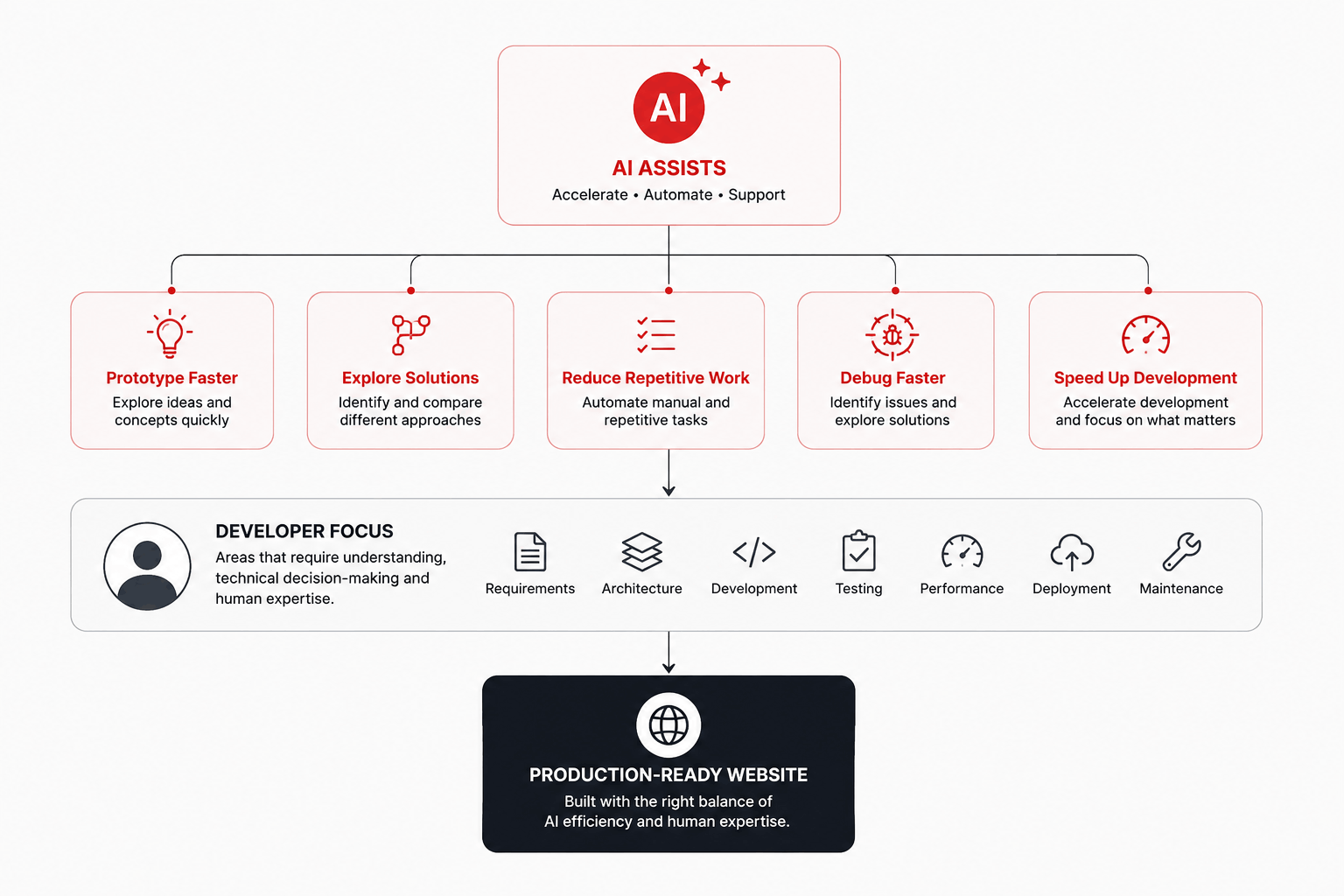
As a web development agency in Malaysia, we use AI across different parts of our development workflow to help accelerate the process while keeping the needs and goals of each project at the centre.
AI Helps Us
- Prototype faster — explore ideas and concepts more quickly.
- Explore solutions — identify and compare different approaches to specific requirements.
- Reduce repetitive work — reduce manual and repetitive tasks throughout the development process.
- Debug faster — identify potential issues and explore possible solutions more efficiently.
- Speed up development — accelerate certain parts of the development process, allowing more time for work that requires greater consideration.
Our Developers Focus On
While AI helps accelerate certain tasks, our developers remain focused on areas that require an understanding of the project and technical decision-making.
- Understanding requirements
- Architecture
- Development
- Testing
- Performance
- Deployment
- Maintenance
This approach allows us to take advantage of AI without making it the sole foundation of how we build websites.
AI can help us produce more in less time. However, deciding what needs to be built, how the system should work, and how to ensure the final result meets the needs of the business remain important parts of the development process.
AI helps us move faster. Experience helps us make the right decisions.
Conclusion
So, can AI build a website?
Yes.
AI can now generate code, create interfaces, build prototypes, and assist developers across various stages of the development process. Its capabilities will continue to evolve and further influence how websites are built.
However, a business website is more than generated code.
A website needs to address real business needs, work reliably and consistently, integrate with the systems it depends on, perform well, and evolve as the business grows.
The question is no longer whether AI or a developer should build a website.
What matters more is how both can be used effectively to create solutions that work in the real world.
The future of web development isn't AI versus developers. It's developers who know how to use AI effectively.
Planning Your Next Website?
Whether you're starting with an idea or looking to improve an existing website, RNTech can help turn your business requirements into a production-ready website.
We use modern development tools, including AI, to build websites around your business needs — from planning and development to testing and deployment.
From idea to live website.